

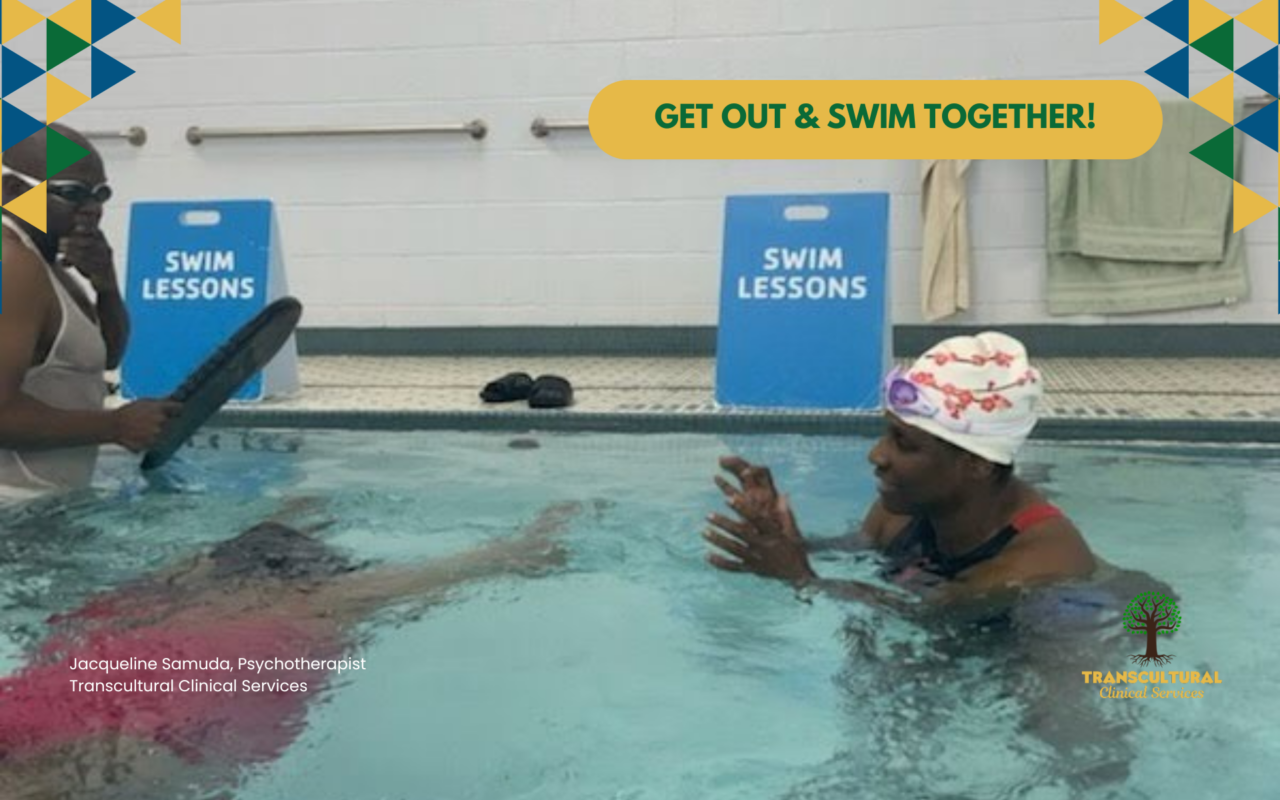
Each May, National Water Safety Month brings attention to the importance of swim education: drowning prevention, and safe experiences around water.
Part of my advocacy for swimming as a life skills and water safety comes from my own near drowning experience years ago. I understand personally how frightening water can feel and find it profoundly moving to watch as people learn a life-saving skill.
As both a psychotherapist and swim instructor, I have become increasingly interested in the emotional relationship many adults and children have with water, and I have seen the visible transformation that occurs when someone realizes, often for the first time, “I can do this.” Not perfectly, not fearlessly, but gradually.
While at the pool one recent cool May evening, I observed one little girl, who appeared to be about 9-years old splashing around excitedly in the shallow end of the pool. She had just finished a swim lesson and appeared to be practicing her swim strokes.
“Okay. You can stay a little longer,” her mother said and got up from a nearby bench where she was sitting. The mother did not join her daughter in the pool but walked back and forth tracking her daughter’s trajectory in the limited parameters that she had set for her.
Each time the girl enthusiastically ventured beyond the limit of the 5-feet depth, the mother did not yell or order her daughter out of the pool. Yet her voice grew firm. “Jessica, come back right now!” She repeated.
Later when Jessica left the pool to allow another class to begin, I chatted with the mother about her daughter’s obvious delight in spending time in the pool. “It’s really important that Jessica learns to swim,” the mother confirmed.
“I don’t swim,” the woman added, lowering her head. “I want to start swim lesson, but I haven’t been able to fit it into my schedule as yet,” she said ruefully.
“Whenever you are ready,” I encouraged her as I shared information about our weekly adult and teen swim class.
Several of our group swim class members had joined our numbers after such conversations, and what began as a parent taking a child for a swim lesson slowly became a family experience filled with encouragement, laughter, and visible pride!
What about you? Are your children swimming and you are not? Think about taking a class with them so that you could learn together how to swim!