

Carol, an accomplished woman from the African diaspora, accepts an international assignment, anticipating that the professional opportunity and increased salary will make six months away from her family worthwhile.
The reality, however, is different. Social isolation, vastly different workplace culture, limited access to familiar foods, and long workdays rapidly erode the routines and connections that sustain Carol.
Carol begins sleeping more, feeling depleted, and losing interest in activities she once enjoyed. Instead of recognizing her distress, Carol questions her resilience: Am I feeling sorry for myself? Shouldn’t I be stronger? Why aren’t I able to push through this as I’ve done in the past?
For many accomplished women of the African diaspora, perseverance has been essential to navigating professional demands, cultural transitions, and personal responsibilities.
Yet, when we become accustomed to pushing through difficulty, acknowledging that our circumstances affect us can feel like weakness.
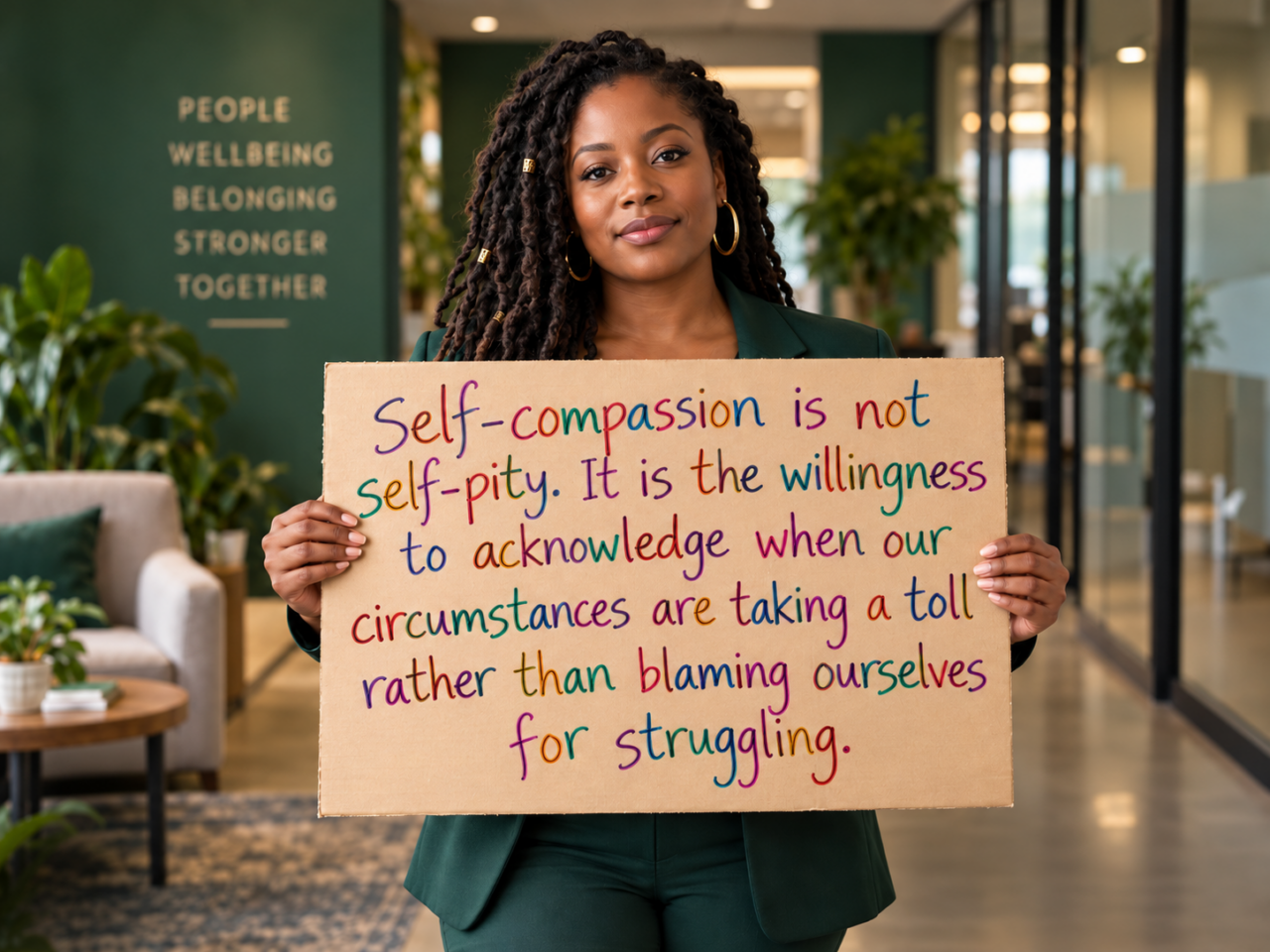
Self-compassion is not self-pity. It is the willingness to acknowledge when our circumstances are taking a toll rather than blaming ourselves for struggling.
The truth is that resilience doesn’t make us immune to isolation, disconnection, or the absence of support.
Our mental health is influenced not only by how we respond to challenges but also by the environments in which we live and work.
Self-compassion does not ask us to become better at enduring the absence of support. It allows us to acknowledge that the absence of support matters – and to consider what needs to change.
Sometimes what we interpret as self-pity is the unfamiliar experience of allowing ourselves to recognize we are hurting.
Strength is not simply the ability to endure. It is also the courage to recognize what we need to thrive.
Ask yourself these questions:
-
What has helped me recognize the difference between feeling sorry for myself and extending compassion to myself?
-
When was the last time I dismissed my own distress in the name of being strong?
-
What might change if, instead of asking myself to push through, I asked what I might need to feel supported and well?
You don’t have to keep pushing through alone. Give yourself permission to pause, listen, acknowledge your reality, and entertain the possibility of needing more support than you ever did in the past.
This post presents a composite scenario for educational purposes. It does not describe an actual client or a single individual’s experience.